 Destinations / Italy / The Colosseum
Destinations / Italy / The Colosseum
Destinations / Italy / The Colosseum
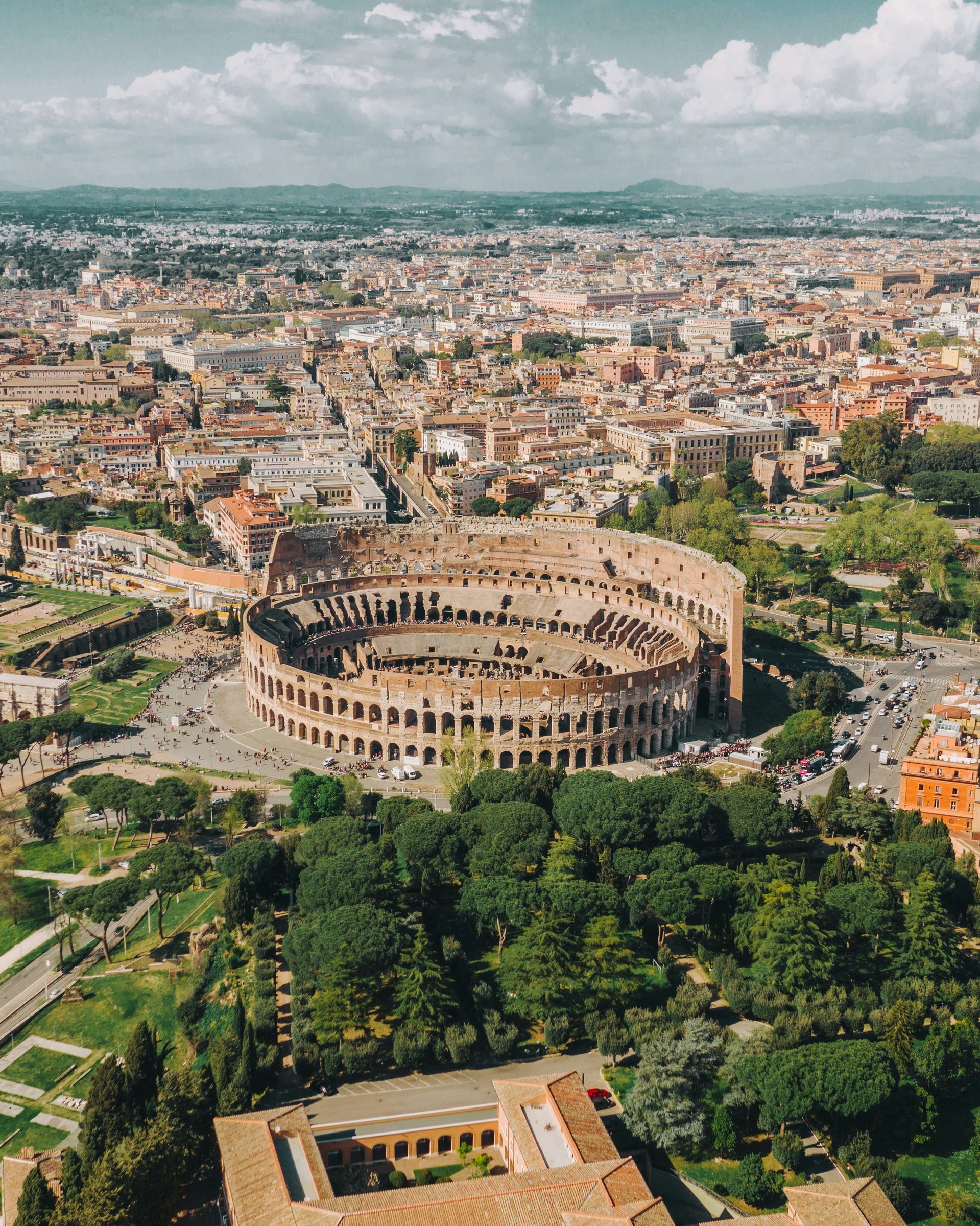
The Colosseum could empty its entire audience in under 15 minutes through a network of numbered exits — a crowd-flow system ancient Rome engineered nearly 2,000 years before modern stadiums needed the same thing.
Construction began under Emperor Vespasian around 70 CE and finished under his son Titus in 80 CE — built specifically to hold spectacles for the Roman public, and still the largest amphitheater ever constructed.
New marble slabs found marking where towering columns stood
Archaeologists working on the Colosseum's ongoing restoration uncovered new marble slabs in March 2026, marking the original positions of columns that once stood in the arena — a fresh discovery layered onto the 2023 partial reconstruction of the arena floor itself.
The largest Roman mosaic ever found just opened, a short walk away
On Oppian Hill, a few minutes' walk from the Colosseum, the Baths of Trajan opened a newly restored underground gallery to the public in September 2026: the "Painted City" fresco and "Great Mosaic," discovered in the 1990s and believed to be the largest wall mosaic and fresco complex from ancient Rome. Access is currently limited to small weekend groups of 15, running Friday through Sunday — worth booking ahead rather than showing up, and worth pairing with a Colosseum visit on the same trip since it's genuinely close by.
Eighty numbered entrances fed directly to specific seating sections, allowing the entire arena to empty in minutes — the same basic crowd-flow principle modern stadiums still rely on.
Below the arena floor, a network of tunnels and cage lifts allowed animals and performers to appear suddenly through trapdoors. For most of modern history the floor was gone entirely, exposing this system to daylight — but a partial reconstruction, completed in 2023, now lets visitors stand on part of the arena floor itself.
Video via YouTube — Parco Colosseo, the official Italian government body managing the site
Entry is by timed slot and sells out, especially in peak season — reserve well ahead of your visit date.
Standard tickets typically include the adjacent Roman Forum and Palatine Hill, worth allotting a half-day for all three.
Despite earthquake damage and centuries of stone-robbing for other buildings, large sections of the original travertine façade still stand.
Three ways to plan a visit around the crowds and the heat.
Morning slots offer cooler temperatures and noticeably thinner crowds than midday.
A specific ticket tier grants access to the underground level and upper tiers, beyond standard arena-floor viewing.
Fiumicino Airport connects to central Rome by train or taxi in roughly 45-60 minutes.
Uneven ancient stone underfoot across a genuinely large site — not a quick stop.
Search options →Rome heat in the Apr–Jun and Sep–Oct visiting windows is real, with minimal shade inside the arena itself.
Search options →Extended walking in the heat, worth refilling rather than relying on vendors.
Search options →Security screening at major Rome sites moves faster with less to check.
Search options →As an Amazon Associate, UniverseTrips.com earns from qualifying purchases.
Rome has a genuine, longstanding leather craft tradition.
Where to find it — An actual artisan workshop, rather than a mass-produced import shop
A legitimate regional specialty.
Where to find it — An actual producer or established Roman shop, rather than an airport shop
Given the Colosseum's actual history, replica coins tied to real Roman history are a more honest souvenir category here.
Where to find it — Museum shops and established antiquities-replica dealers in Rome
We're building out full ticket-tier comparisons, Forum pairing guides, and timing tips for a day among Rome's ruins.
Back to top attractions