 Destinations / Rwanda / Volcanoes National Park
Destinations / Rwanda / Volcanoes National Park
Destinations / Rwanda / Volcanoes National Park
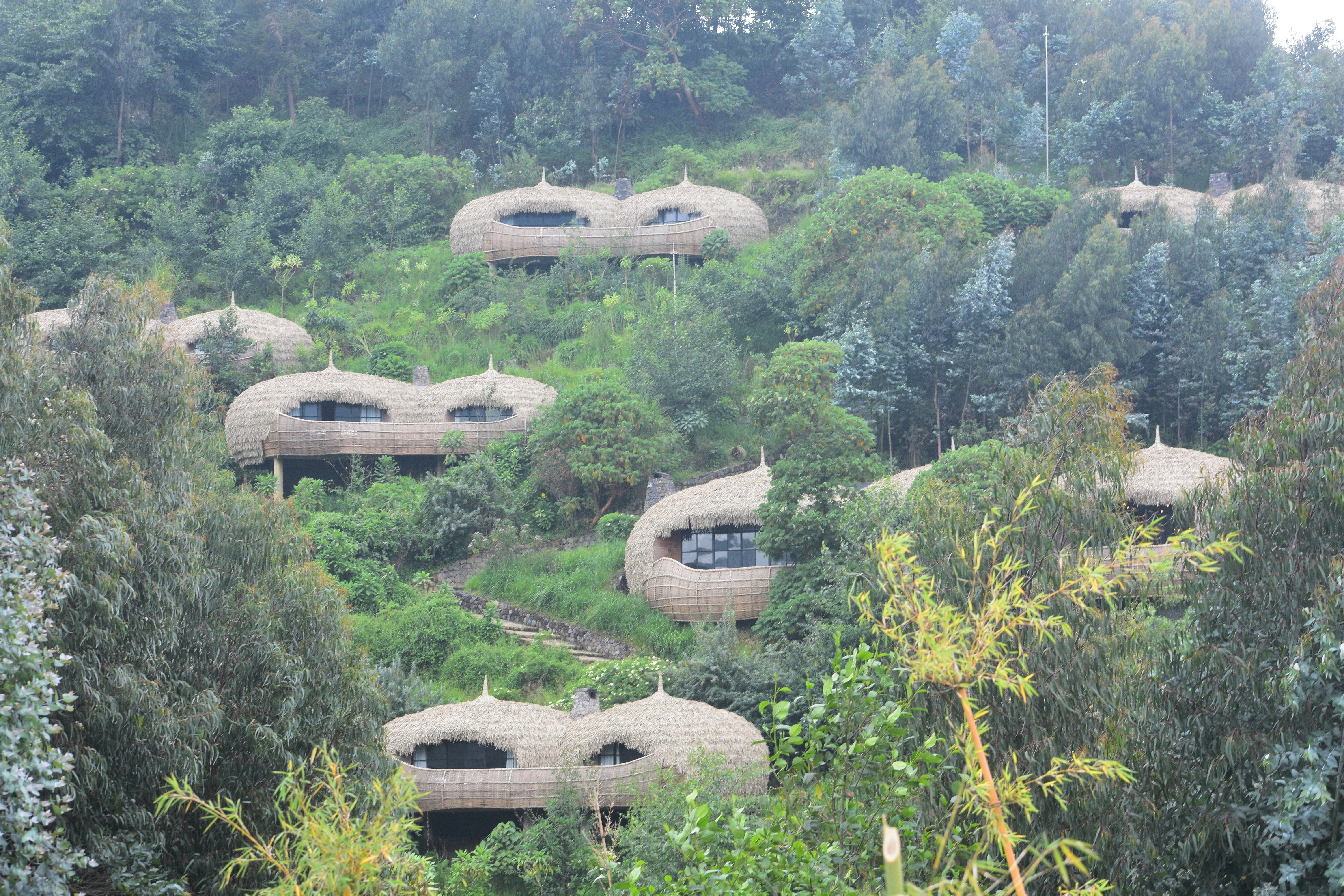
Cocoon-shaped lodges woven from local reed and thatch sit tucked into eucalyptus and bamboo on the slopes below the Virunga volcanoes — base camp for the mountain gorillas living in the forest just above.
Every lodge on this hillside is shaped like a nest, not a building — round, low, and thatched, so the ridge reads as forest first and architecture second, even from the next slope over.
Woven bamboo balconies, reed-thatched roofs, stone footpaths cut straight into the slope — the whole camp is designed to sit under the tree line rather than above it, so the volcanoes stay the view, not the buildings.
Gorilla permits are limited by design — one habituated group, one small group of visitors, one hour with them once you're found. The trek itself can run from 30 minutes to several hours through bamboo forest, depending on where the family has moved.
Video via YouTube — Visit Rwanda, RDB's official tourism channel
Trails run steep and muddy through volcanic soil; porters are available and worth hiring regardless of fitness level.
Rwanda issues a fixed daily number of permits — booking months ahead is standard, not optional, in high season.
Permit revenue directly funds anti-poaching patrols and the surrounding communities — part of why the population is growing.
Three things to sort out before you land in Kinigi.
Reserve through the Rwanda Development Board well ahead of your dates — permits are the hard limit on this trip, not flights or lodging.
Waterproof boots, gaiters, and gardening gloves for stinging nettles matter more here than anything else on your packing list.
Briefings start at 7am at the park headquarters in Kinigi — stay in the area the night before rather than driving in from Kigali same-day.
Trails run steep and muddy through volcanic soil — ankle support matters as much as waterproofing.
Search options →Stinging nettles line the trail — thin gardening gloves protect your hands when you grab vegetation for balance.
Search options →Keep mud and wet undergrowth out of your boots on a trek that can run several hours through bamboo forest.
Search options →Even in the dry season windows (Jun–Sept, Dec–Feb), sudden rain at this elevation is common.
Search options →Lodge elevation sits around 2,300–2,600m — mornings are cold before the trek itself warms you up.
Search options →Dense forest terrain — worth having on hand for the trek itself, not just the lodge.
Search options →As an Amazon Associate, UniverseTrips.com earns from qualifying purchases.
Rwanda's signature handwoven basket — a genuine symbol of peace and reconciliation, and a real source of income for women's weaving cooperatives since 1994.
Where to find it — Iby'Iwacu Cultural Village in Kinigi, a short drive from the park, or cooperative stalls near park headquarters
Rwanda's high-altitude coffee has real international recognition — fresher and more traceable bought at source than at an airport kiosk.
Where to find it — Cooperatives around Musanze and Ruhengeri
Local artisan cooperatives near the park sell carvings tied directly to the conservation story — proceeds often support the same communities the trekking permits fund.
Where to find it — Artisan cooperative stalls near the park entrance
A distinctly Rwandan geometric relief art form, traditionally made from cow dung and natural pigments.
Where to find it — Cooperative shops around Musanze, and nationwide
Apiaries around Musanze produce honey tied to the same landscape the gorillas live in.
Where to find it — Roadside cooperatives and shops around Musanze
Cost breakdown, trek-day logistics, and video of a real trek in progress.
The tradition behind it, how it works, and video from a real ceremony in Kinigi.
We're building out full permit-booking guides, lodge comparisons, and trek-day itineraries for Volcanoes National Park.
Back to top attractions