The Sheesh Mahal was designed around a specific trick of physics — thousands of tiny convex mirrors set into the walls and ceiling, arranged so a single flame could illuminate the whole room.
Sheesh Mahal means "Mirror Palace" — built within Amber Fort's private quarters, its walls and ceiling are entirely covered in mirror-glass mosaic and gilded stucco, a decorative technique called ayina-kari.
Video via YouTube — 4K walkthrough of the Sheesh Mahal, Amber Fort
The design is as much engineering as decoration — every element serves the single-flame effect.
Small convex mirror fragments, set at slightly varied angles, scatter and multiply any available light across the room.
Much of the mirror glass used was imported from Belgium, prized for its reflective quality at the time of construction.
A single candle lit at night reflects thousands of times across the mirrored surfaces, appearing to fill the entire hall with starlight.
The Sheesh Mahal was part of the private royal quarters, not a space meant for public court functions.
This decorative art form appears across several Rajput and Mughal palaces, with Amber Fort's version among the most celebrated.
Accessed through the Ganesh Pol gateway, the Sheesh Mahal occupies the fort's most private, innermost courtyard.
During the day, sunlight through the courtyard creates a similar scattering effect across the mirrored surfaces.
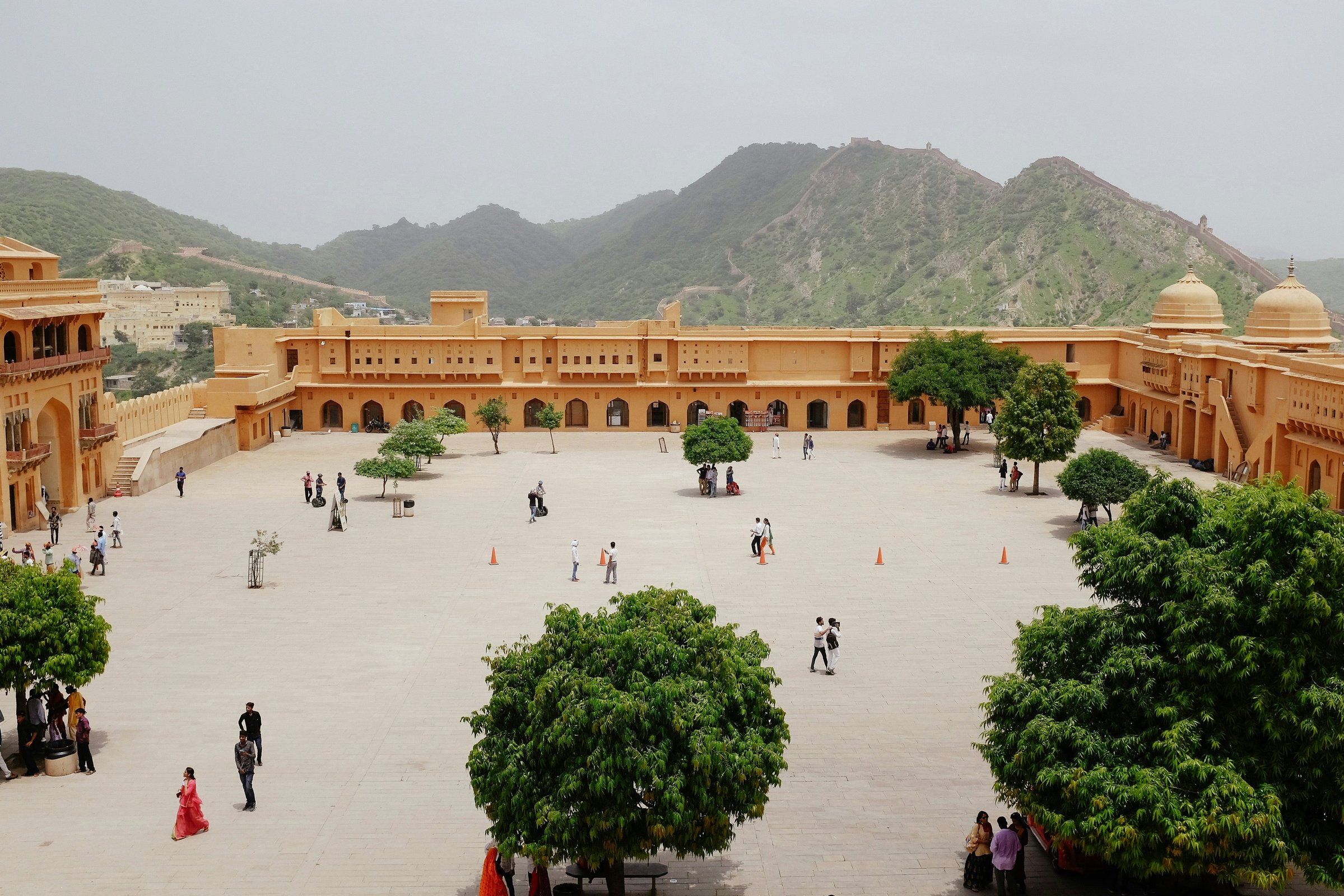
It's tucked in the fort's third courtyard — easy to miss if you don't specifically look for the Ganesh Pol entrance.
Back to Amber Fort