Maasai Mara — Guide
A jump that marks manhood
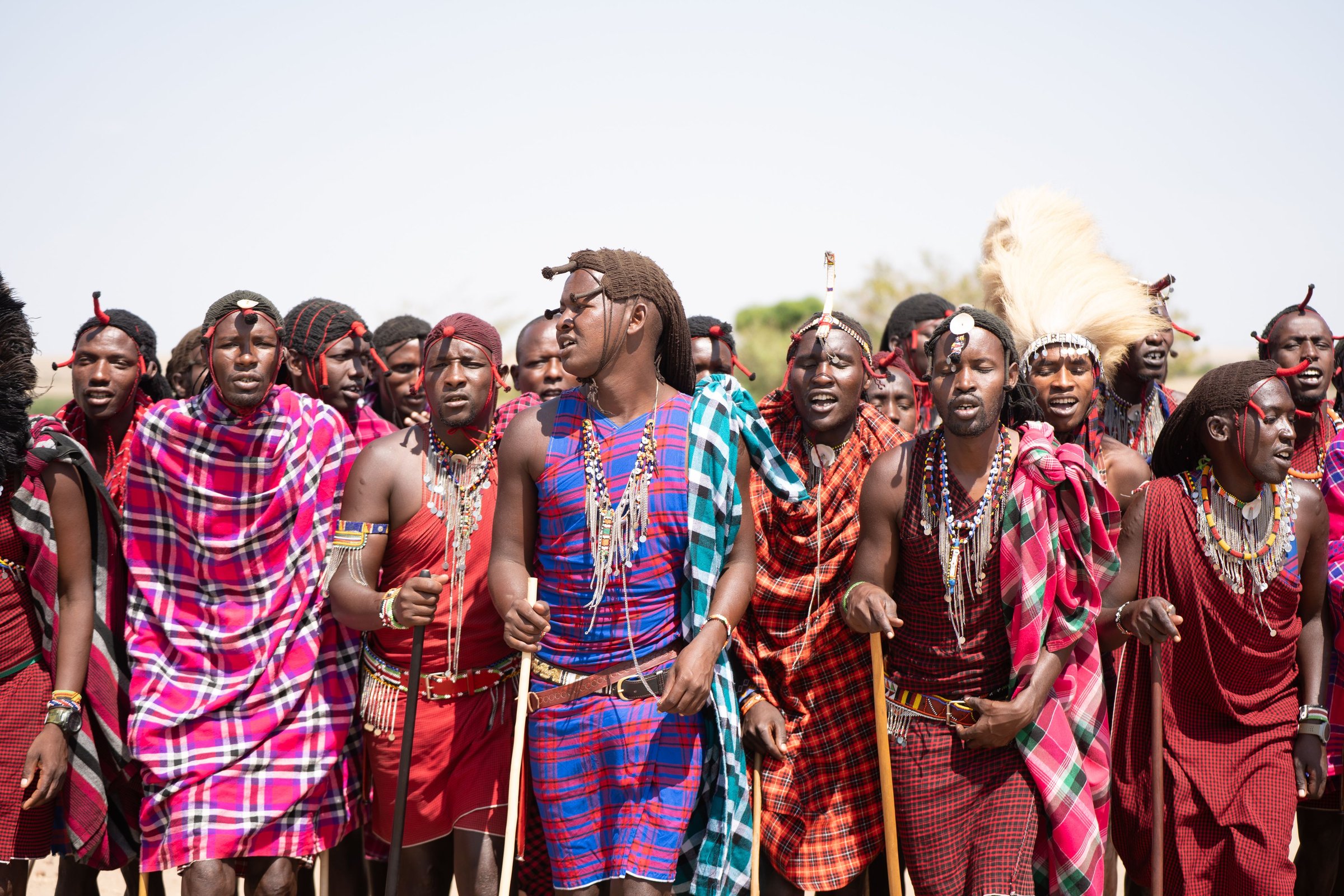
The Adumu, or jumping dance, is one part of Eunoto — the multi-day ceremony that graduates young Maasai warriors, or morani, into the ranks of elders.
The Adumu, or jumping dance, is one part of Eunoto — the multi-day ceremony that graduates young Maasai warriors, or morani, into the ranks of elders.
Warriors form a circle and take turns leaping straight upward without letting their heels touch the ground — height and control both matter, and jumping higher than peers carries real social weight.
Video via YouTube — “Adumu | The Maasai Traditional Dance”
Adumu is a small part of a much longer ceremonial process.
Eunoto marks the formal transition of junior warriors to senior status, involving singing, dancing, and ritual over more than a week.
Jumping higher than peers is understood as a demonstration of the physical readiness expected of a warrior moving toward elder status.
While men jump, women sing and chant to set the pace — the dance is a collective performance, not an individual display alone.
The dance is believed to have developed originally as a way for young men to build the leaping ability useful in combat and hunting.
Adumu is performed as part of Eunoto, the ceremony marking a warrior's shift from moran (junior warrior) toward elder status.
Abbreviated performances are now common at cultural visits and conservancies, distinct from the full ceremonial version.
Full Eunoto ceremonies, including Adumu, continue to be held within Maasai communities on their traditional cycle.
Community conservancies bordering the reserve often arrange respectful cultural visits — worth booking through a guide connected to the specific community.
Back to Maasai Mara