 Destinations / Japan / Kyoto's Hills
Destinations / Japan / Kyoto's Hills
Destinations / Japan / Kyoto's Hills
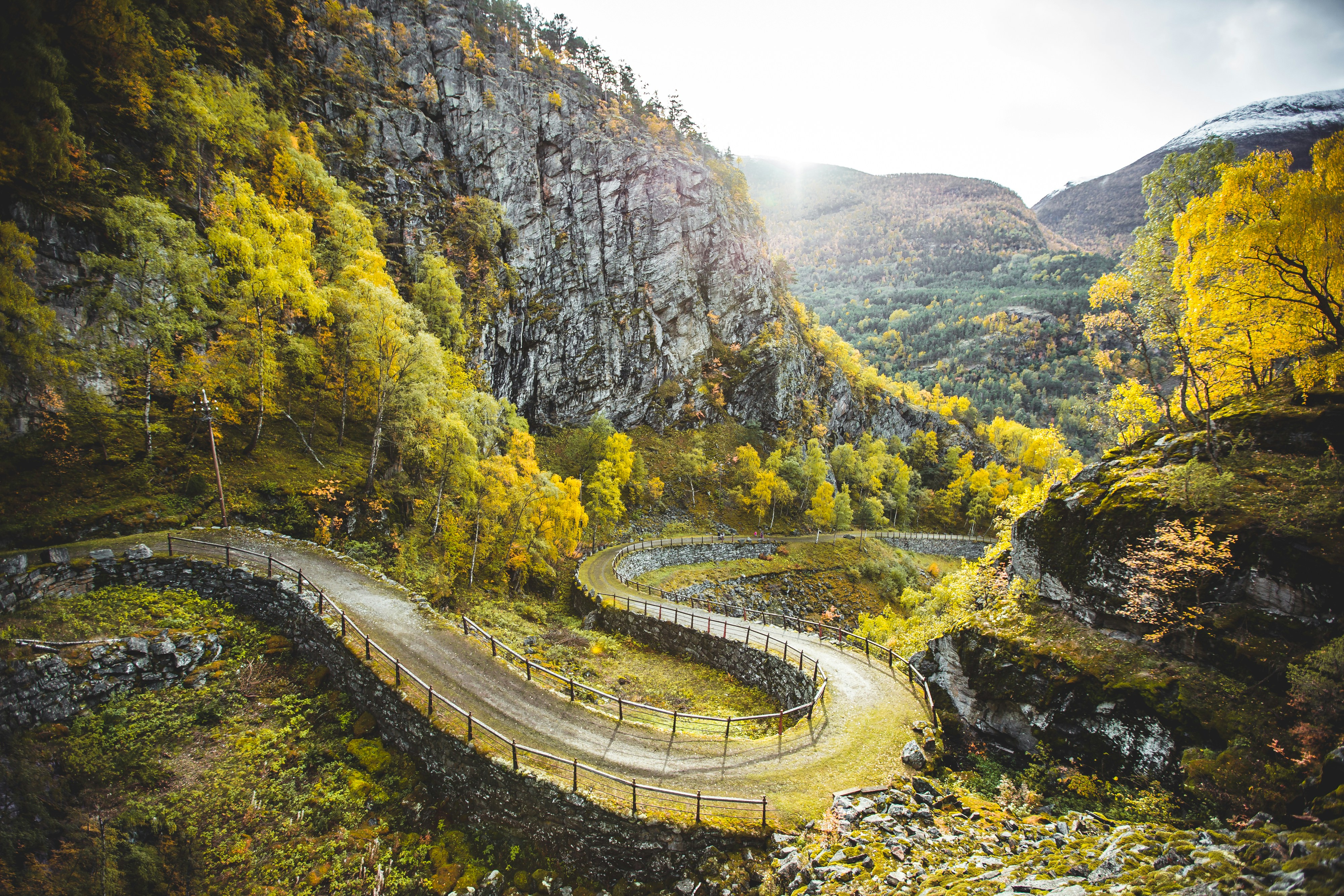
Above the temples and rooftops, Kyoto's surrounding hills carry old stone-walled paths through granite gorges — every autumn, the maples and birches turn the whole route amber, red, and gold at once.
The hills around Kyoto don't announce themselves the way the city's temples do — you find them by following a switchback up through granite and stone walls, until the trees close in gold overhead.
Kyoto's hotel tax jumped as of March 2026
Responding to record overtourism, Kyoto raised its accommodation tax up to tenfold — luxury stays (¥100,000+/night) now carry a ¥10,000 per-person, per-night tax, though budget hotels remain at the older ¥200 rate. Worth factoring into your accommodation budget, or consider a day trip from Osaka.
These switchback paths were cut for foot and cart traffic long before cars, and many still carry only walkers — hand-fitted stone retaining walls hold the route to the cliff face through the tightest curves.
Kyoto's autumn colour — momiji — moves down from the hills into the city over a few short weeks each November, and these outlying gorges usually turn a week or two before the famous temple gardens do.
Video via YouTube — Visit Japan, JNTO's official tourism channel
A mountain temple reached by cable car or steep forest steps, said to be where the tengu spirits trained.
A river-valley shrine famous for its lantern-lit stone steps, especially striking against autumn colour.
Riverside platforms built out over the Kibune river, where restaurants serve seasonal kaiseki just above the water.
Three ways to catch the hills at their best, away from the temple crowds.
A short train from central Kyoto, then a forest hike over the ridge between the two villages — the single best half-day out of the city.
Peak foliage weekends draw heavy crowds to Kyoto's hills — arrive by train before 9am on a weekday for a quieter walk.
Kurama's onsen sits right by the station — a fitting way to close a hike through the gorge before the train back into the city.
The route follows stone-walled switchback paths through a granite gorge — solid footing matters on the descents.
Search options →Peak momiji season (mid-Nov to early Dec) runs genuinely cool, especially in the gorge's shade.
Search options →The gorge-to-gorge walk runs around two hours with limited stops.
Search options →As an Amazon Associate, UniverseTrips.com earns from qualifying purchases.
The Uji region near Kyoto has centuries of real matcha-growing history.
Where to find it — Tea shops in Uji or central Kyoto
A Kyoto-specific ceramic tradition, named for the Kiyomizu-dera area.
Where to find it — Shops around Kiyomizu-dera in Kyoto
Kyoto's traditional silk weaving craft, genuinely centuries old and specific to the city.
Where to find it — The Nishijin district of Kyoto
We're building out full foliage-timing guides, hiking routes, and onsen recommendations for the hills above Kyoto.
Back to top attractions