What stands today is mostly Ming dynasty stonework — but the wall's story stretches back two thousand years, through earthworks, rebuilds, and abandonments by rulers who came before.
The first wall segments date to the 7th century BCE, built independently by separate warring states — it took Qin Shi Huang's unification of China to link them into a single defensive idea.
Video via YouTube — “The Great Wall of China: Exploring 2,000 Years of History” documentary
Each dynasty added, rebuilt, or abandoned sections for its own reasons.
Individual states built defensive walls independently, centuries before any idea of a unified 'Great Wall' existed.
Qin Shi Huang, China's first emperor, ordered existing state walls connected — the origin of the wall as a single concept, though little of this earthwork survives.
Beginning in the 14th century, Ming rulers rebuilt the wall in stone and brick — the version most visitors actually walk.
Separate warring states construct their own defensive walls, unconnected and unrelated in purpose.
Qin Shi Huang orders existing walls connected into a single line following China's unification.
Following the fall of the Yuan dynasty, Ming rulers begin an extensive stone-and-brick rebuild that continues for over two centuries.
The wall is inscribed as a UNESCO World Heritage Site, formally recognizing its combined historical scope.
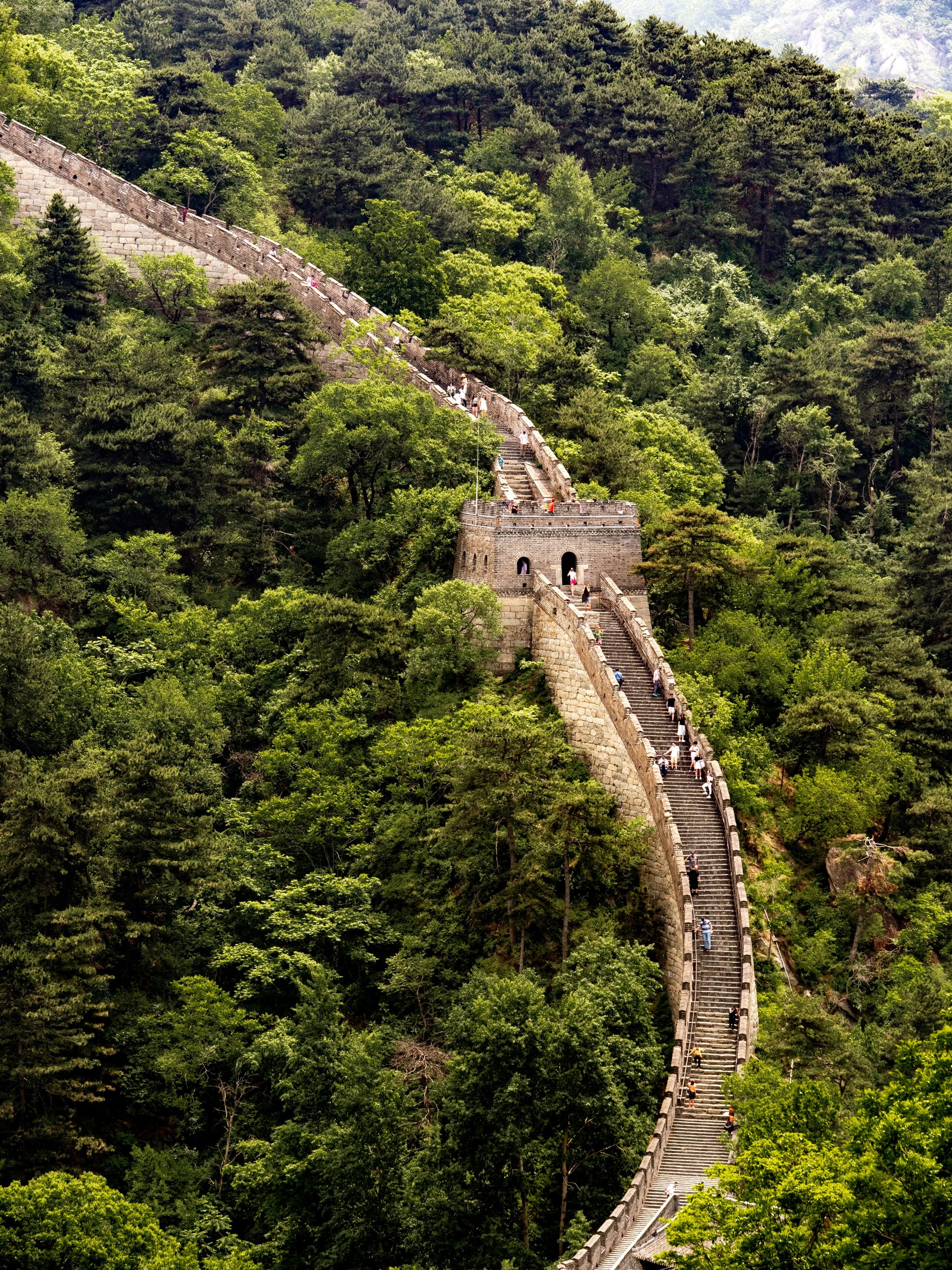
Mutianyu's watchtowers each carry small placards noting their dynasty and rebuild history, worth reading as you climb.
Back to The Great Wall