 Destinations / China / The Great Wall
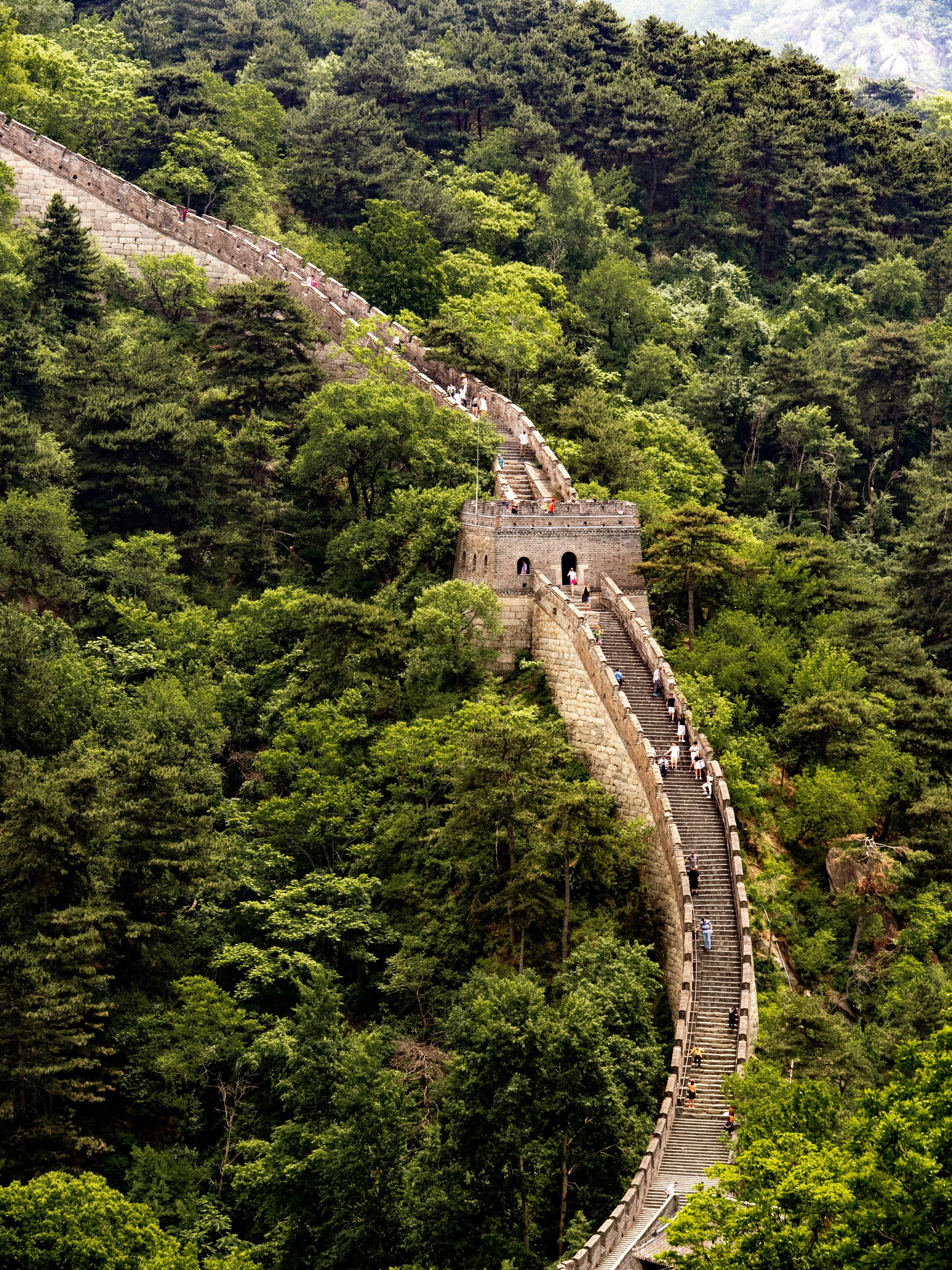
There's no single "Great Wall" — it's a network of walls, watchtowers, and fortifications built and rebuilt by different dynasties over two thousand years, following the mountain ridgelines rather than fighting them.
Most of what visitors actually walk today is Ming dynasty construction, built from the 14th century onward — the wall's steepest, most photographed sections follow mountain ridgelines specifically because elevation itself was a defense.
China's first dedicated Great Wall protection law, and a new section opening
Beijing's first-ever dedicated Great Wall protection regulations took effect March 1, 2026. Separately, the historically strategic Jiangjunguan pass in Beijing's Pinggu district — never before open to visitors — is set to open to the public as early as late 2026.
Combining every wall, trench, and natural barrier built across dynasties, the full defensive network measures over 21,000 km — no single section, however long the hike feels, comes close to the whole picture.
Badaling is the most restored and most crowded, closest to Beijing. Mutianyu offers steeper, more dramatic scenery with noticeably fewer visitors — most first-time travelers are better served choosing Mutianyu over the more famous name.
Video via YouTube — a UNESCO/NHK co-production on this World Heritage Site
Step heights vary deliberately along steep sections — originally meant to slow an advancing enemy's pace, still noticeable underfoot today.
Domestic tourism volume affects crowding more than time of year — a weekday visit outside Chinese public holidays makes a bigger difference than which month you go.
A few stretches near Mutianyu and beyond remain crumbling and unmaintained — atmospheric, but requiring sturdier footwear and caution.
Three ways to plan a day trip out from Beijing.
A roughly 90-minute drive from central Beijing, with a cable car option to skip the steepest initial climb.
Closest to Beijing and most heavily restored — a reasonable choice if time or mobility is limited, at the cost of crowds.
Beijing Capital Airport connects to the city center by express train or taxi in roughly 40-60 minutes.
The wall follows mountain ridgelines on purpose — steps are steep, uneven, and often centuries-old stone.
Search options →Genuinely useful on the steeper descents, particularly on less-restored sections away from Badaling.
Search options →Elevation changes along the ridgeline shift the temperature more than you'd expect at ground level.
Search options →Quieter, less-restored sections have far fewer vendors than the main tourist stretches.
Search options →Worth carrying your own snacks and water for a multi-hour hike along the wall.
Search options →As an Amazon Associate, UniverseTrips.com earns from qualifying purchases.
A genuinely vast, legitimate regional specialty.
Where to find it — An actual tea shop in Beijing, rather than a tourist kiosk near the wall itself
China's silk tradition is centuries old and real.
Where to find it — Silk markets in Beijing
A traditional Chinese decorative craft closely associated with Beijing specifically.
Where to find it — Beijing craft shops and markets
We're building out full section comparisons, cable-car logistics, and day-trip itineraries from Beijing.
Back to top attractions