UniverseTrips.com Destinations / Switzerland
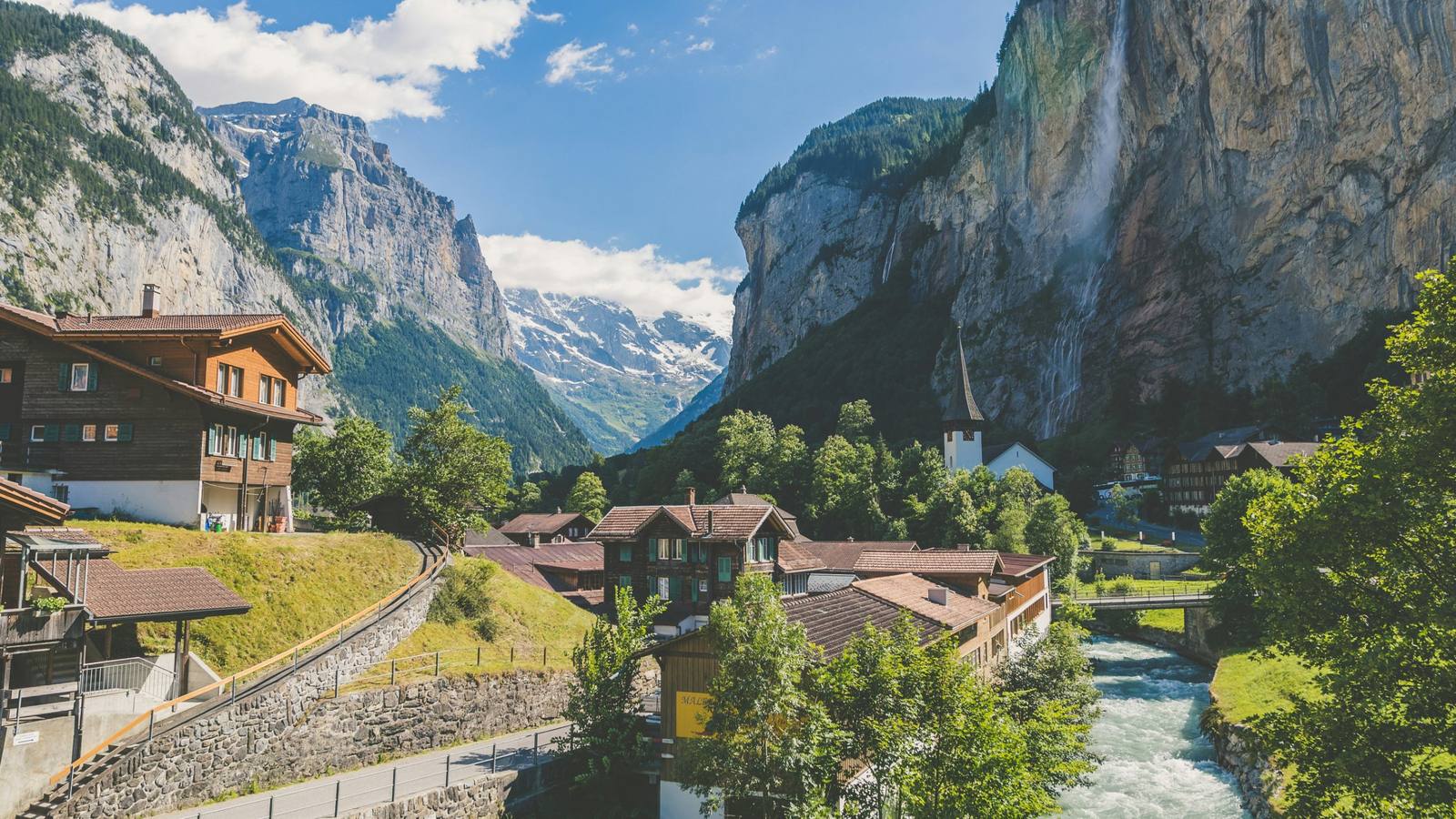
Wooden chalets in the Lauterbrunnen valley, Switzerland, with a waterfall dropping from the cliffs and Alpine peaks behind
Switzerland — Country guide

Switzerland, where the train ride is the view

Glacier-fed lakes, car-free mountain villages and the Matterhorn, joined by trains, boats and cable cars that run like clockwork.

Switzerland is small, beautiful and expensive, so how you travel matters as much as where you go. Most visitors plan around the rail network and a travel pass, and 2026 has added something new for non-Europeans: biometric registration at the border, with an online travel authorisation to follow.

The essentials, updated for 2026

Entering Switzerland
Schengen rulesSwitzerland is in the Schengen Area. Europe's Entry/Exit System, which records fingerprints and a photo of non-EU visitors at the border, has been fully operational since 10 April 2026.
Coming next: ETIAS
Expected late 2026Visa-exempt visitors will need an online ETIAS travel authorisation, due to launch in the last quarter of 2026 with a transition period before it becomes compulsory.
Swiss Travel Pass, 2026
From CHF 254For 3 days in 2nd class (CHF 405 in 1st); CHF 439 for 8 days. Covers trains, buses, boats and city transport, plus 500+ museums.
Jungfraujoch return from Interlaken
CHF 261.20May to October; CHF 224.40 the rest of the year. With a Swiss Travel Pass it falls to CHF 177.20 in summer.
Currency
Swiss franc (CHF)Switzerland does not use the euro, though some shops and stations accept it and give change in francs.
Zermatt
Car-freeDrivers park in Täsch and take the shuttle train; most visitors simply arrive by rail.

Sources: Swiss Travel Pass 2026 prices, Jungfraujoch fares, EES and ETIAS timeline and Zermatt Tourism, checked 9 October 2026. Confirm before you pay.

Where to go

Peaks and waterfalls

Bernese Oberland

Interlaken sits between two lakes at the foot of the Eiger, Mönch and Jungfrau. Below the peaks lies the Lauterbrunnen valley, its cliffs streaked with waterfalls, and above them the railway climbs to the Jungfraujoch, the highest railway station in Europe.

Jungfraujoch return from Interlaken Ost: CHF 261.20 in summer

The Matterhorn

Zermatt

A car-free mountain village beneath the Matterhorn. Drivers park in Täsch, about 5 km away, and continue by shuttle train; direct trains from Zurich Airport take about three and a half hours.

Start or end point of the Glacier Express

Lake and mountains

Lucerne

A compact old town on the lake, crossed by its covered wooden Chapel Bridge, with boat trips to the mountains around it. Mount Rigi, Stanserhorn and Stoos are free with the Swiss Travel Pass.

Easy day trips by boat, cogwheel railway and cable car

The gateway

Zurich

Switzerland's largest city and main international airport: an old town along the Limmat river, a lake for swimming in summer, and trains to almost anywhere in the country within a few hours.

Most long-haul flights arrive here

Lakeside and vineyards

Geneva and Lake Geneva

Geneva's lakefront and international quarter, then east along the shore to the terraced Lavaux vineyards, Montreux and the island castle of Chillon.

Boat and train links all along the lake

Scenic rail

The Glacier Express

The famous panoramic train runs between Zermatt and St. Moritz in about eight hours, over high passes and viaducts. The Swiss Travel Pass covers the fare, but seat reservations are compulsory and cost extra.

Book seats well ahead in summer

When to go

Switzerland is a year-round destination, but the mountains set the calendar.

Summer and early autumn

  • June to September is hiking season: mountain trails and high passes are open and the lakes are warm enough to swim.
  • It is also the busiest and most expensive time; Jungfraujoch fares are at their summer high from May to October.
  • September and early October bring clearer air and thinner crowds.

Winter

  • December to March is ski season in Zermatt, the Jungfrau region and the Engadine around St. Moritz.
  • Lower Jungfraujoch fares outside May to October, and Christmas markets in the cities.
  • Some high passes and hiking routes close, but the main railways run all year.

What to pack

Pack for two climates: warm valleys and lakes, and cold, bright conditions at altitude.

Waterproof hiking shoes

Mountain trails stay wet and rocky, even in summer.

Search options

Warm layers

It can be near freezing at the Jungfraujoch while the valleys are warm.

Search options

Sunglasses and sunscreen

Snow and glaciers at altitude reflect strong sunlight.

Search options

A light rain jacket

Mountain weather changes quickly.

Search options

A plug adapter

Switzerland uses its own Type J socket; many two-pin European plugs fit, but not all.

Search options

A reusable water bottle

Tap water is drinkable and many towns have public fountains.

Search options

A small daypack

For hikes, boat trips and long rail days.

Search options

A compact power bank

Timetable and ticket apps drain a phone on long travel days.

Search options

As an Amazon Associate, UniverseTrips.com earns from qualifying purchases.

Book this trip

Links to trusted booking partners

Exploring more of Europe?

Browse our destination guides, from the Dolomites and Neuschwanstein to the Colosseum and the Eiffel Tower.

All destinations