 Destinations / Greece / Santorini's Northern Villages
Destinations / Greece / Santorini's Northern Villages
Destinations / Greece / Santorini's Northern Villages
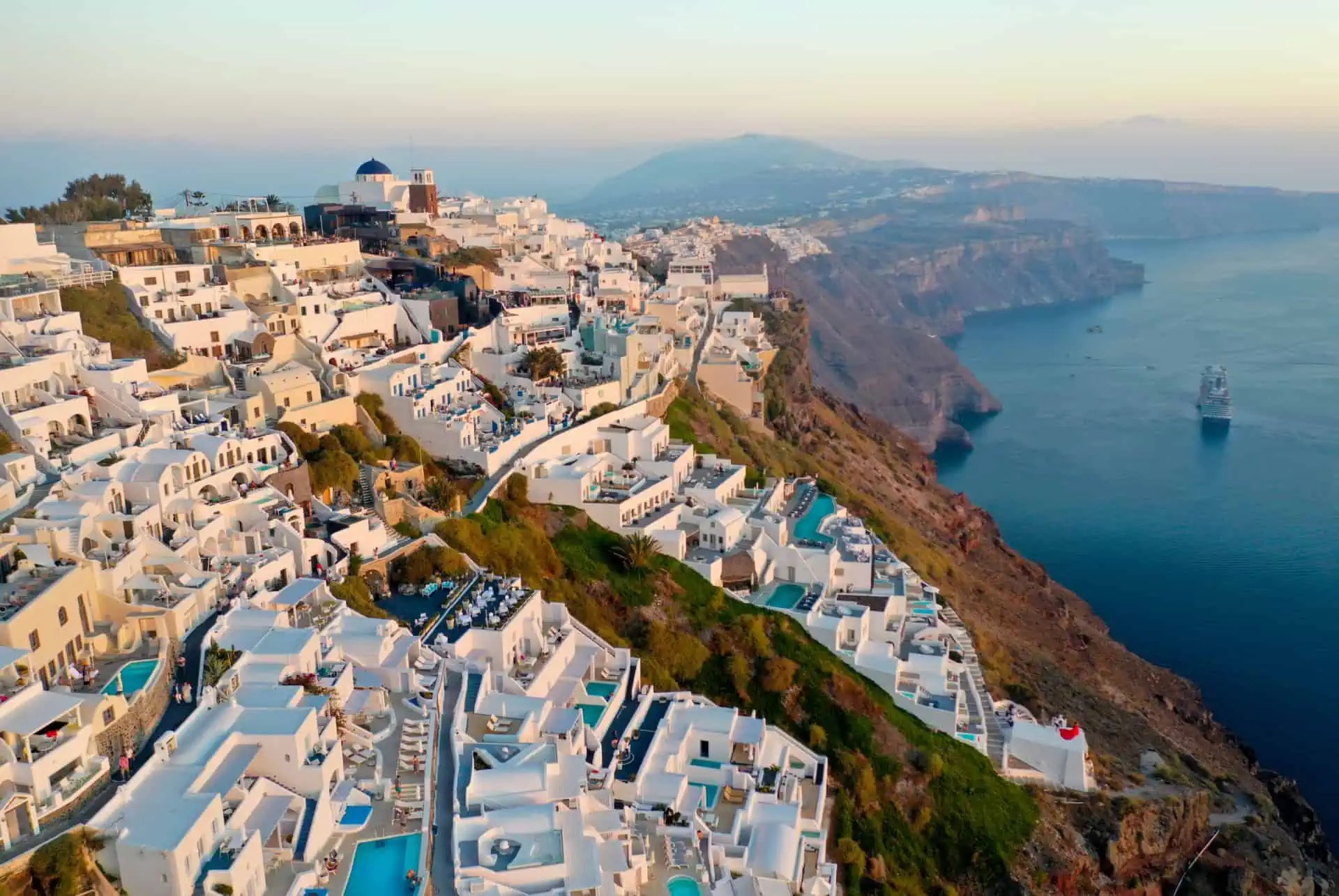
Everyone photographs Oia at sunset. Fewer notice that the whitewashed villages stacked along Santorini's caldera rim weren't built to perform for a camera — they were built into volcanic rock because the coastline below was once too dangerous to live on.
The real architecture of Santorini's north isn't performing for the crowd — it's a defensive village layout, centuries old, stacked into the cliffs because pirates once made the flat coastline too dangerous to live on.
Yes, it's safe — and 2026 bookings are strong
Santorini experienced a major earthquake swarm in early 2025 (over 25,000 tremors, temporary evacuations) and a smaller flare-up in April 2026. Seismic activity has since returned to normal background levels, confirmed safe by Greek authorities, and early booking data shows 2026 occupancy tracking above 2025 levels. One lasting change: cruise arrivals are now capped at 8,000 passengers per day (down from peaks of 17,000), so book accommodations and ferries with that in mind.
Oia gets the crowds and the postcards. Imerovigli sits higher and quieter along the same caldera rim, with a fraction of the foot traffic — and Firostefani links the two on foot, a walkable ridge line where the Aegean drops away almost a thousand feet below the front doors.
The caldera itself is the collapsed rim of a volcanic eruption around 1600 BCE, one of the largest in recorded history. The white lime-wash on every house isn't just aesthetic — it reflects heat, and for centuries was the cheapest building material on a volcanic island with little timber.
Video via YouTube — Visit Greece, the official Greek National Tourism Organisation channel
Fira, Firostefani, Imerovigli, and Oia connect along a single caldera-edge path — several miles, doable in one long day on foot.
The island's black- and red-sand beaches on the opposite coast are a direct legacy of the same eruption that carved the caldera.
The same caldera view is visible from Imerovigli and Firostefani, with noticeably more room to actually enjoy it.
Three ways to take in the caldera villages without fighting the sunset crowds.
Start in Fira and walk the caldera-edge path north through Firostefani and Imerovigli, arriving in Oia in time for the view — sunhat required.
Skip Oia's sunset crush entirely — Imerovigli sits higher on the same caldera rim with an equally clear view and far less foot traffic.
Santorini's airport runs direct flights from Athens year-round; Oia and Imerovigli are roughly 30–40 minutes away by car or local bus.
The northern villages are built into steep caldera cliffs — expect steps and slopes, not flat streets.
Search options →Aegean sun is strong across the Apr–Oct season, with little shade along the cliff paths.
Search options →Whitewashed buildings reflect light back at you as much as the sun hits directly.
Search options →The combination of direct sun and reflective white surfaces adds up faster than it feels.
Search options →Extended walking on cliffside paths between Oia, Imerovigli, and Firostefani.
Search options →Worth having for ferry transfers, which run cooler out on the water.
Search options →As an Amazon Associate, UniverseTrips.com earns from qualifying purchases.
The island's volcanic soil produces genuinely distinctive wine, especially from the Assyrtiko grape.
Where to find it — Wineries across the island, several open for tastings
A legitimate, high-quality regional product.
Where to find it — An actual producer, rather than a generic tourist shop
A real regional pottery tradition.
Where to find it — Shops in Oia and Fira — look for genuinely handmade pieces over printed imports
We're building out full village-by-village guides, walking routes, and sunset-timing notes for the caldera rim.
Back to top attractions