 Destinations / France / Eiffel Tower
Destinations / France / Eiffel Tower
Destinations / France / Eiffel Tower
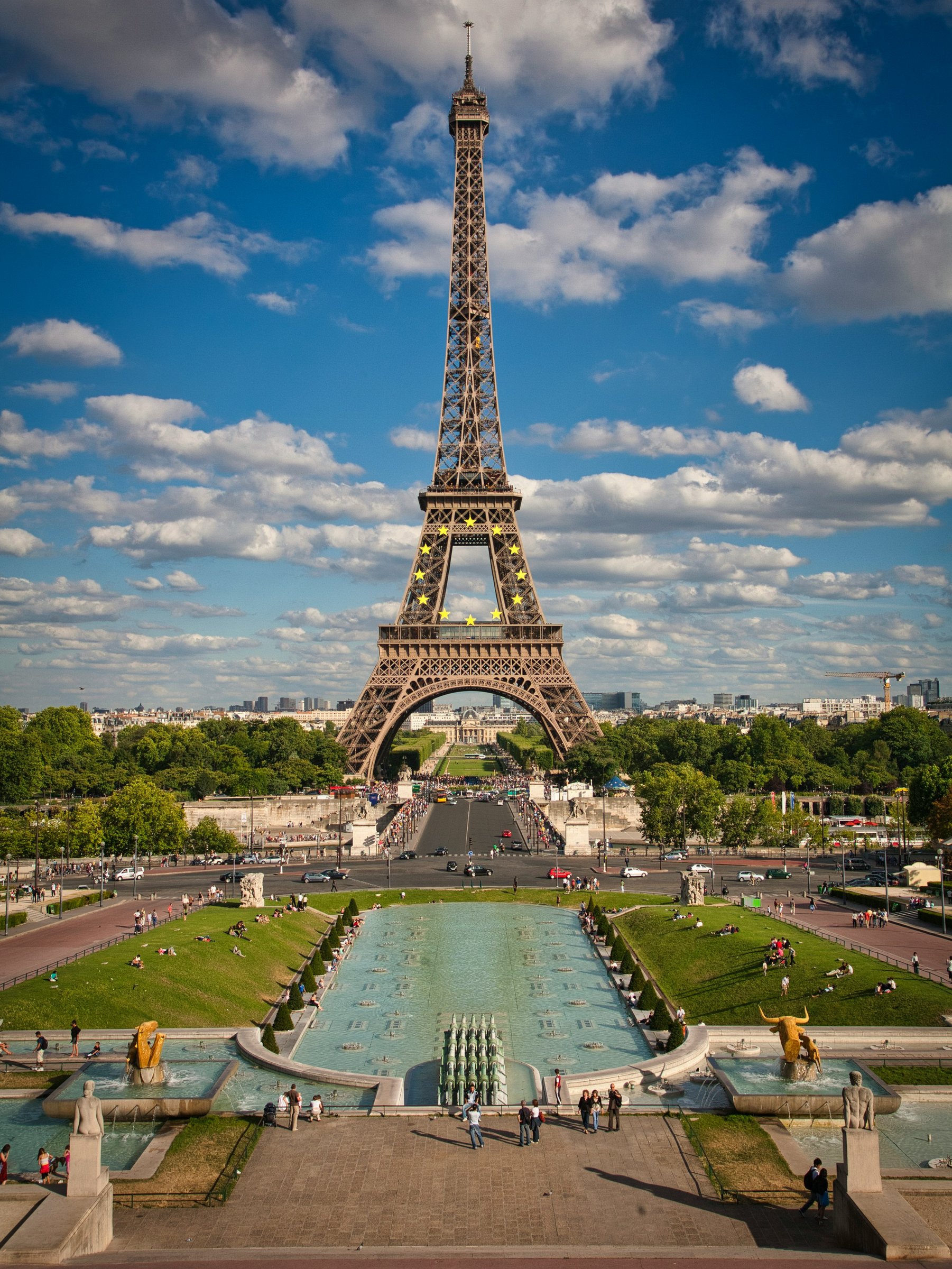
Built for the 1889 World's Fair with a 20-year demolition clause in its permit, Gustave Eiffel's tower was meant to be temporary — it survived because of the one thing its critics never anticipated: radio.
Parisians largely hated it when it went up — a "metal asparagus" out of step with the city's stone facades — and its own building permit gave it twenty years before it was due to come down. It's still standing because Eiffel saw the demolition clause coming and built the case for keeping it before anyone had to ask.
Every iron piece was drafted on its own blueprint, cut in Eiffel's workshop, then shipped to the Champ de Mars pre-numbered for assembly — closer to a giant three-dimensional puzzle than a conventional build. Around 2.5 million rivets hold it together.
As the 1909 demolition deadline approached, Eiffel funded research into wireless telegraphy from the tower's summit — proving its military and scientific value just in time. The French army kept it for radio use, and it never came down.
Video via YouTube — Paris je t'aime, Paris's official tourism board
72 women scientists honored, a new ticket rule from Sept 29, and a brief September closure
The Eiffel Tower unveiled proposals to inscribe 72 women scientists' names on the monument (announced January 2026). Starting September 29, 2026, professionally-guided groups will no longer be able to buy tickets at the ticket office — book ahead online if visiting with a tour group. The tower also closed briefly on September 7–8 after staff walked out in protest over the treatment of female employees during a private group visit; it reopened the next day once the operating company acknowledged the issue, with French authorities opening an investigation.
Skip-the-line tickets sell out days in advance in peak season — walk-up lines can run past two hours.
Climbing to the second floor by stairs is cheaper and often faster than the lift queue, and gives you the ironwork up close.
For five minutes every hour after sunset, 20,000 bulbs light up the tower in a sparkling display — separate from its steady gold lighting.
Three ways to plan a visit around the tower and its neighborhood.
The Trocadero gardens, across the Seine, give the classic full-tower photo — especially at sunrise before the crowds arrive.
The lawns of the Champ de Mars, directly beneath the tower, are the local spot for a picnic with the tower overhead.
RER trains connect both Paris airports to the city center in 35-50 minutes, with a further Metro or taxi ride to the tower itself.
Best times to visit are early morning or after dark — temperatures shift more at those hours than midday.
Search options →The Champ de Mars grounds and queue areas involve real standing and walking time.
Search options →Paris showers are common enough to plan around, whatever the season.
Search options →Evening visits especially — photography plus navigating the area adds up.
Search options →As an Amazon Associate, UniverseTrips.com earns from qualifying purchases.
France's perfume industry, centered in Grasse, is a genuine centuries-old craft.
Where to find it — An actual perfumer in Paris, rather than airport duty-free brands
A real Parisian specialty confection.
Where to find it — An actual patisserie, rather than generic tourist versions sold near major landmarks
France has a genuine, longstanding leather craft tradition.
Where to find it — Established Parisian leather goods makers
We're building out full ticket-tier comparisons, best photo spots, and pairing recommendations for a day around the tower.
Back to top attractions