For decades, Dippy the Diplodocus cast greeted every visitor through the museum's front hall. In 2017, a real blue whale skeleton took his place — a three-year project, not a simple swap.
Hope, the whale now suspended overhead, is a real skeleton — a blue whale stranded near Ireland in 1891 — chosen specifically to symbolize a conservation success story rather than an extinct species.
Video via YouTube — Natural History Museum's own behind-the-scenes film
Moving a 4.5-tonne skeleton into a Victorian ceiling took more than just cranes.
Hope's skeleton, weighing roughly 4.5 tonnes and measuring 25.2 metres, was cleaned and remounted bone by bone.
Hope is the only blue whale skeleton in the world mounted in a diving, lunge-feeding position, rather than a static straight line.
Conservators found the skeleton had been packed with crumpled 1930s newspaper during a prior treatment, offering an unplanned historical record.
The Diplodocus cast, a replica rather than a real fossil, becomes the fixture most visitors associate with the museum's entrance hall.
Dippy is taken apart piece by piece, cleaned, and prepared for a nationwide UK tour instead of retirement.
The blue whale skeleton, renamed Hope, is suspended from Hintze Hall's ceiling, marking the museum's biggest transformation in 136 years.
Blue whales, hunted to near-extinction in the 20th century, have slowly recovered under protection — the reasoning behind Hope's name.
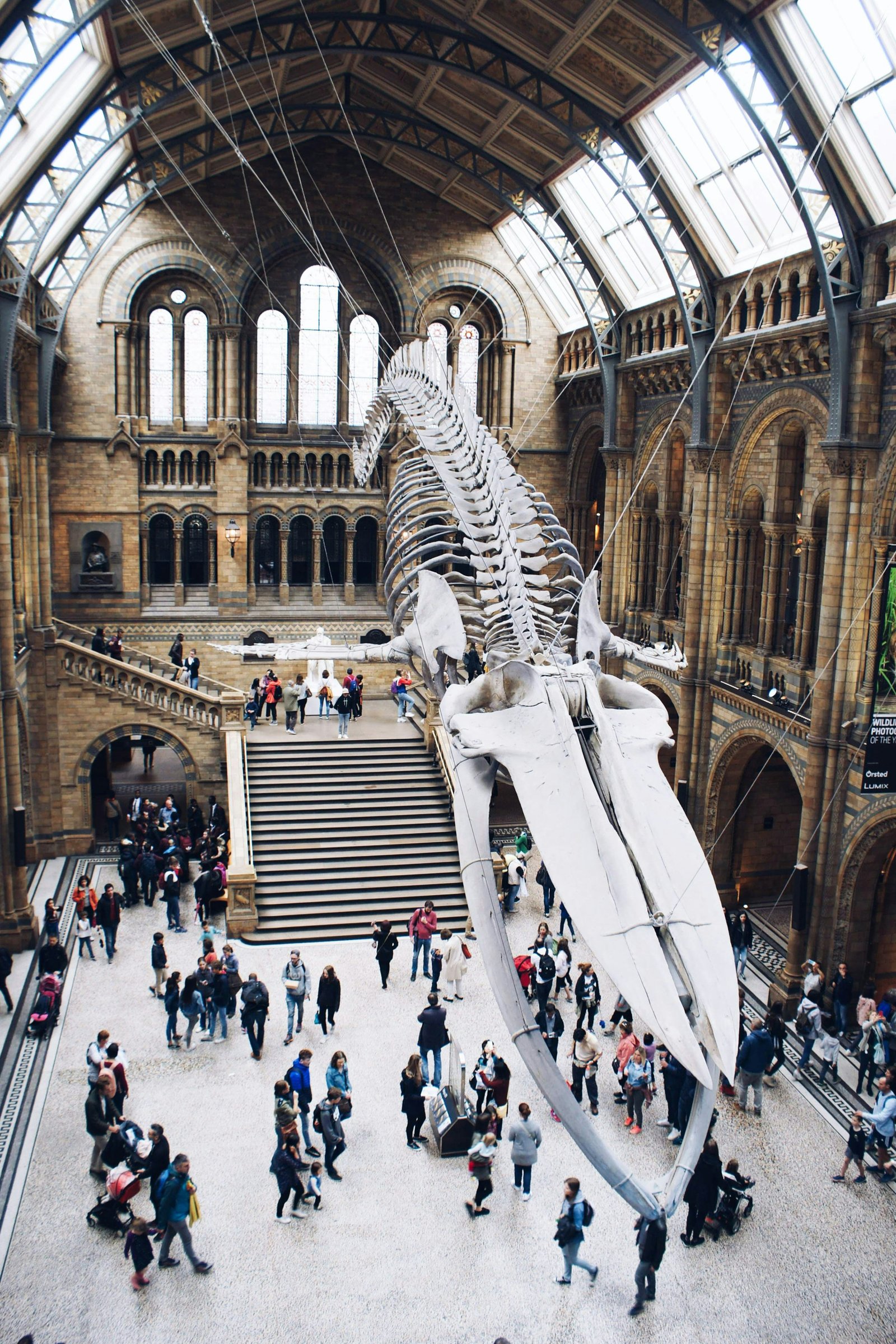
Free general admission covers Hintze Hall — arrive early to see the whale skeleton before the entrance hall fills with tour groups.
Back to Natural History Museum