A single baobab trunk can store up to 120,000 litres of water — the reserve that lets these trees survive Madagascar's dry season while everything around them withers.
Six of the world's nine baobab species are found only in Madagascar, most concentrated in the dry deciduous forests of the island's western region, where the avenue's famous trees stand.
Video via YouTube — “The baobab tree — A universe of its own”, DW Documentary
Every unusual feature of the tree traces back to surviving long dry seasons.
The baobab's swollen trunk acts as a natural water reservoir, letting it endure months without rain.
Baobabs shed their leaves in the dry season, leaving bare, root-like branches that gave rise to the tree's inverted appearance and its legends.
Several of Madagascar's baobab species are now critically endangered, primarily due to deforestation and agricultural expansion.
Some baobabs along the avenue are estimated to be centuries old, though exact ages are difficult to verify without annual growth rings.
The Avenue of the Baobabs is granted temporary protected status by the Madagascar government, following conservation advocacy.
Agricultural clearing around the avenue continues to threaten the surrounding ecosystem, even with the trees themselves protected.
The avenue has become a rallying point for broader forest conservation efforts across western Madagascar.
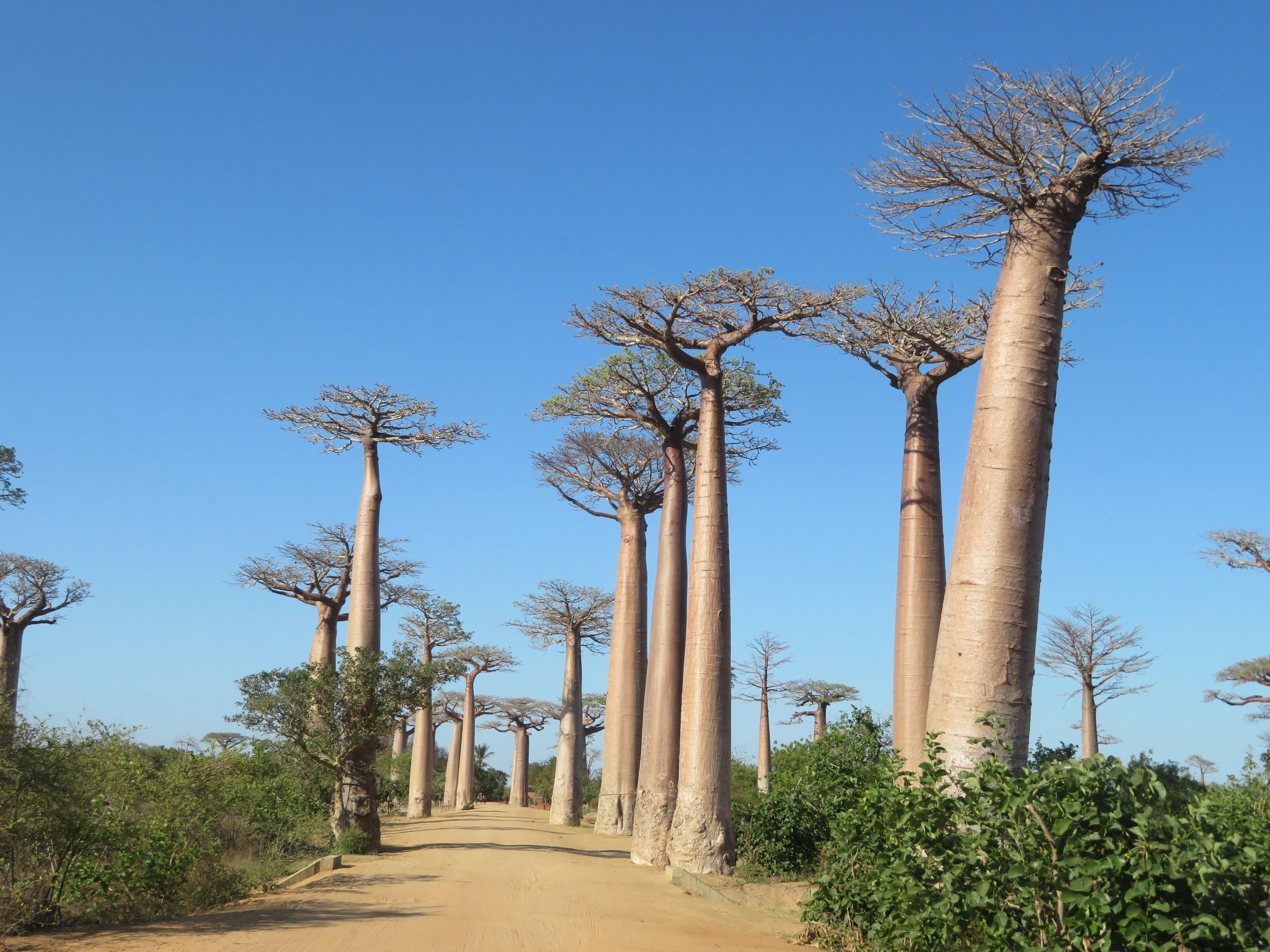
Sunset is the classic time to visit — the low light silhouettes the trunks along the dirt road for the avenue's signature photograph.
Back to Avenue of the Baobabs