 Destinations / South America / The Amazon Rainforest
Destinations / South America / The Amazon Rainforest
Destinations / South America / The Amazon Rainforest
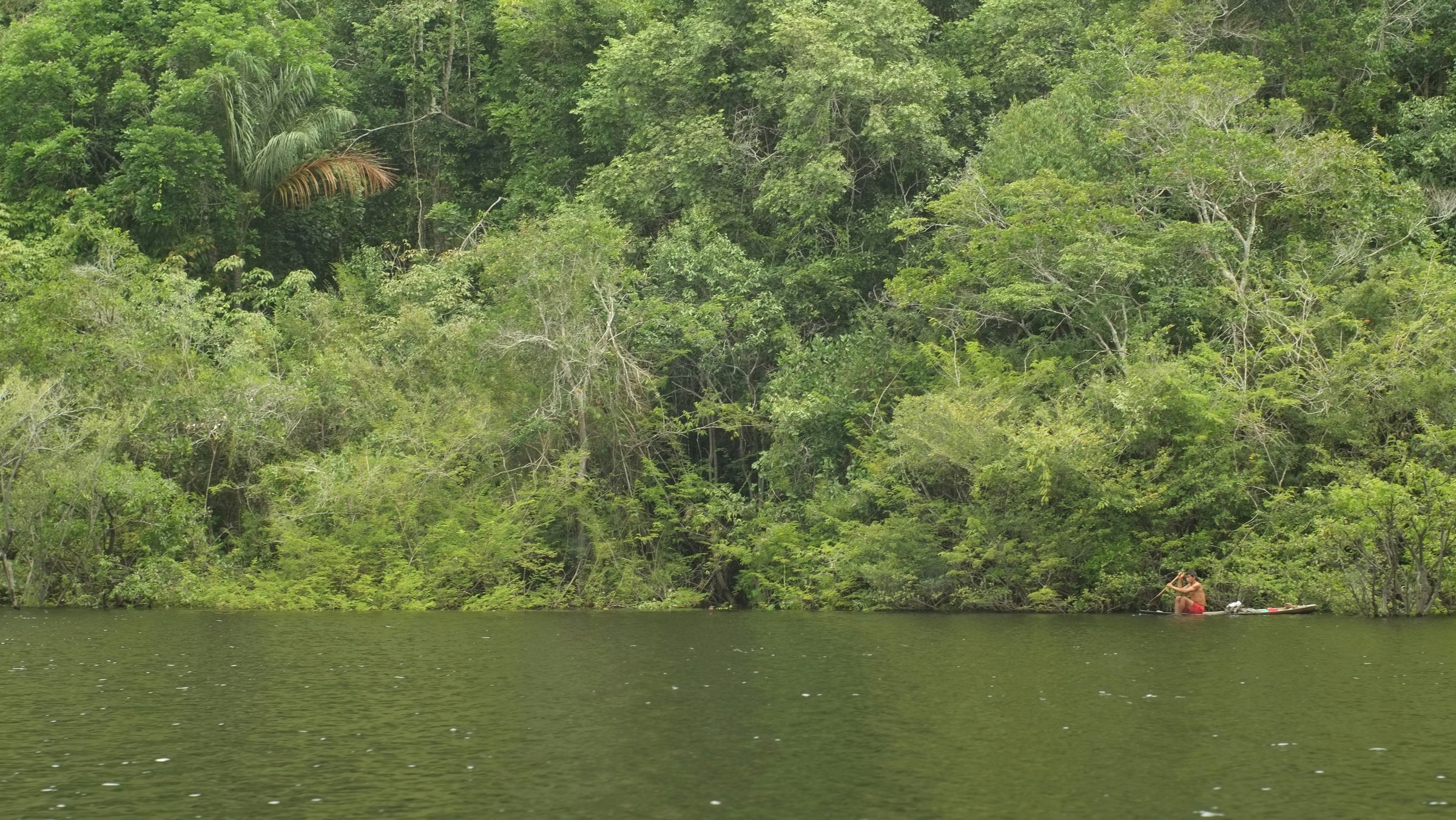
The Amazon isn't just the world's largest rainforest — it's a system so vast it generates a meaningful share of its own rainfall, recycling moisture across a basin spanning nine countries.
The Amazon spans nine countries, but roughly 60% sits within Brazil — the forest is so large it holds an estimated 10% of all known species on Earth, many still undocumented.
Deforestation fell to a 10-year low
Brazil's National Institute for Space Research recorded a 38% drop in Amazon deforestation in the first half of 2026 compared to the same period in 2025 — the lowest level in a decade, driven by stronger enforcement and Indigenous-led forest protection.
The Amazon River discharges more freshwater into the ocean than the next several largest rivers on Earth combined — and the "blackwater" rivers that feed it, stained dark by decomposing leaf matter, are where much of the region's river travel actually happens.
Across much of the basin, rivers are the roads — communities are reached by boat, not vehicle, and daily life (fishing, transport, trade) follows the rhythm of the water rather than any road network.
Most lodges and reserves are reached by boat from a river gateway city like Manaus or Iquitos, not by road.
Look specifically for lodges and guides that work directly with local and Indigenous communities, rather than large-scale extractive tourism.
The "drier" months (roughly June–November) still see regular rain — it's a rainforest year-round, just with somewhat lower river levels.
Three common ways travelers experience the Amazon.
Manaus sits deep in the Brazilian Amazon with international flight connections, serving as the launch point for river lodges nearby.
Reachable only by air or river (no road access), Iquitos serves as the entry point for Peru's Amazon lodges and reserves.
Most visitors base themselves at a river lodge for several days, taking guided boat excursions rather than a single day trip.
Humidity here is constant — cotton stays wet for hours; quick-dry fabric actually dries between boat legs.
Search options →Blackwater rivers and dense forest mean serious mosquito exposure — worth using something stronger than a standard travel spray.
Search options →River travel is the primary way to move through the basin — a dry bag protects electronics and documents from spray and rain.
Search options →Dense forest cover means both sun and insects — long, breathable layers beat repeated reapplication of repellent.
Search options →Boat decks and riverside landings are wet and uneven — sandals aren't enough here.
Search options →Much of the basin's wildlife is spotted from the water at a distance, not up close on a trail.
Search options →As an Amazon Associate, UniverseTrips.com earns from qualifying purchases.
Both genuinely sourced from the Amazon basin — tastes and travels differently fresh from the source region.
Where to find it — Markets in Manaus or Iquitos
Riverside and forest communities produce woven baskets and wood carvings tied to real local life.
Where to find it — Cooperative-sold pieces in Manaus or Iquitos, rather than mass-produced imitations
The Amazon's rubber boom era left a lasting craft tradition — small latex goods still made regionally.
Where to find it — Craft shops in Manaus
We're building out full lodge comparisons, river-season timing, and responsible-operator guides for the basin.
Back to top attractions